


The 5-hour rule: From Bill Gates to Elon Musk, why the most successful people spend their free time learning
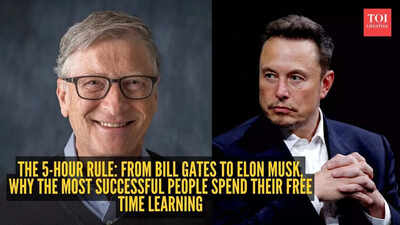
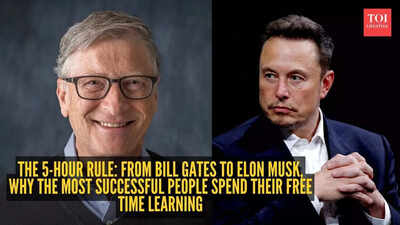
You just walked in the door from an exhausting day at work. You’re hungry and spent, just wanting to catch your breath for a minute. You grab something to eat and then sit in front of the TV. The next thing you know, you’ve just binge-watched five episodes of the latest show.While that’s okay occasionally, we all need ways to decompress and shut down, this isn’t a healthy habit. That’s why the most successful people in the world spend their free time learning.It’s not exactly breaking news. During his five-year study of more than 200 self-made millionaires, Thomas Corley found that they don’t watch TV. Instead, an impressive 86 percent claimed they read, but not just for fun. What’s more, 63 percent indicated they listened to audiobooks during their morning commute.Most popular billionaires and leaders, like Barack Obama, Bill Gates, Elon Musk, Warren Buffett, Oprah Winfrey, credit their success to reading. As Gates once told The New York Times, reading “is one of the chief ways that I learn, and has been since I was a kid.”So how do they find the time to read daily? They adhere to the five-hour rule.
Breaking down the five-hour rule
The five-hour rule was coined by Michael Simmons, founder of Empact, who has written about it widely. The concept is wonderfully simple: No matter how busy successful people are, they always spend at least an hour a day, or five hours a week, learning or practicing. And they do this across their entire career.Simmons traces this phenomenon back to Ben Franklin, who was constantly setting aside time to learn. Franklin generally did this in the morning, waking up early to read and write. He established personal goals and tracked his results. In the spirit of today’s book clubs, he created a club for artisans and tradesmen; they’d come together to pursue self-improvement. He also experimented with his new information and asked reflective questions every morning and evening.The five-hour rule advocates actively learning something new or engaging in a variety of activities for at least one hour each workday. You can progress both personally and professionally by doing this as you pick up new abilities and information. Additionally, it might assist you in keeping your knowledge of specific topics current.The five-hour rule’s central idea is that investing at least five hours a week in deliberate learning can have enormous long-term advantages, regardless of how successful or knowledgeable you are. The majority of those that use it divide the time into three different categories:
The five-hour rule’s three buckets
Today’s successful leaders have embraced Franklin’s five-hour rule by breaking the rule into three buckets.
1. Read
Self-made millionaires including Mark Cuban and Dan Gilbert, owner of the Cleveland Cavaliers, read between one and three hours daily. Elon Musk learned how to build rockets, which led to SpaceX, by reading. Besides expanding your knowledge, Jack Ma, co-founder of Alibaba, says that “reading can give you a good head start; this is often what your peers cannot obtain. Compared to others, readers are more likely to know other industries’ strategies and tactics.“Reading regularly might help you unwind and gradually increase your knowledge. You normally need reading goals, which could be expressed as a specific number of chapters per day or books per month, in order to use that time as effectively as possible.Even if you can’t commit to an hour or more of reading every day, start with 20 to 30 minutes. I always have a book with me so when I’m waiting for a meeting to start or in the waiting room of a doctor’s office, I can read instead of waste time on my smartphone. You could also try audiobooks during your daily commute or when exercising.
2. Reflect
The five-hour rule also includes reflecting and thinking. This could be just staring at the wall or jotting down your thoughts.Analysing information is known as ideating. The five hours you have available each week can be used to read and then reflect on the knowledge you gained from the books, in addition to reflecting on various occurrences at work or in your personal life.Focusing on the past gives you a chance to learn from mistakes you’ve made, as well as assess what you did correctly. As a result, you’ll be better suited to achieve your goals and improve your life. In 2014, a University of Texas study found that mental rest and reflection improves learning.Know the questions you want to ask. Stick with just two or three questions focused on that specific day. For example, if you attended a conference, ask, “What were the key takeaways?” and “How can I apply this to my business?”After finishing the book, try to put your thoughts in writing. The ability to effectively reflect on the events of the day and take appropriate action will become apparent over time. You can also write down any queries you may have in your head. At the same time, it assists you in learning new information and updating previously learned material. It aids in the growth of both your current and new skills.
3. Experiment
The third and final bucket is rapid experimentation. Ben Franklin and Thomas Edison became leading inventors and thinkers because of their experiments. We have Gmail because Google allowed employees to experiment with new ideas.You can utilise your five hours to learn and absorb knowledge, as well as test out new hypotheses. You can become more innovative and creative by putting your academic knowledge into practice. You can even utilise failed experiments as a teaching tool.The reason experiments are so useful is because you have facts, not assumptions. Experiments show you what’s working. You can learn from your mistakes and obtain feedback from others. Best of all, experimentation isn’t that time-consuming. Most of the time, you’re testing through the same activities you’d perform without testing.SpaceX wouldn’t be the first private firm to launch a rocket into orbit and have it land on Earth unharmed if Elon Musk hadn’t dared to try new things. Without Jack Ma’s experimentation with Alibaba, Goldman Sachs and Softbank would not have become Alibaba’s original backers. He even suggests using the information learned from books in practical situations.
Make learning a habit
When you make learning a habit, you’ll very likely be more successful and productive across different areas of your life. By investing in a reading habit, you can ensure you’re growing yourself – and your company – every day.The five-hour rule isn’t about being perfect. It’s about being consistent. Spend five hours a week learning. Read, reflect, and experiment. That’s how you grow. That’s how you succeed.