


Great Apes and human beings have been laughing similarly for the last 15 million years: Study |
Laughter is one of the most familiar human sounds, but it may be much older and more commonly shared even among our closest relatives than we usually think. Recently, a new study added an interesting similarity by looking at how humans and great apes express joy.Interestingly, laughter is more than just a reaction to humour, the study suggests that it is a shared rhythm, social behaviour, and the link between sound and a common piece of ancestry.Humans and great apes may have been laughing similarly for about 15 million years, and according to researchers at the University of Warwick, the shared rhythm of laughter in humans, chimpanzees, bonobos, gorillas, and orangutans points to a common ancestral pattern.
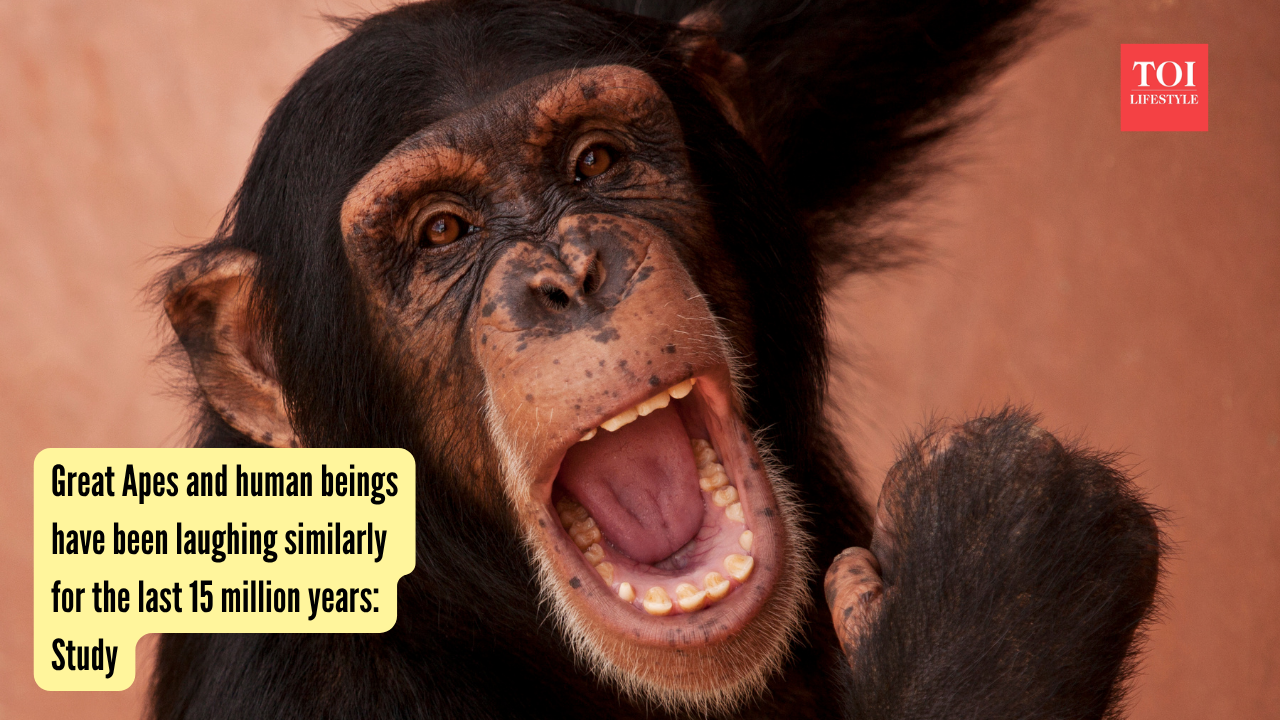
Representative Image
Human beings and great apes share similar laughing patterns
As reported by AP News, “In a way, we are very similar to other great apes because we’ve been laughing in a similar way for 15 million years,” said study author Chiara De Gregorio, a primatologist at the University of Warwick in England.To explore this idea, researchers tickled 13 captive apes and examined older recordings of their sounds. They then compared those with the giggles of four young children being tickled and playing at home. The team found that the laughter of both humans and apes followed similar rhythmic patterns, especially in the spacing between sounds. This means the basic timing of laughter appears to have remained stable across millions of years.
Human beings and great apes share the same laugh from their last common ancestor
The study, published in Communications Biology, suggests that this rhythm may have been present in the last common ancestor shared by humans and great apes. The researchers said, “Unlike speech, laughter is shared by all living great apes. By comparing how different species laugh, we can see that a basic rhythmic structure has remained unchanged since our last common ancestor. That’s extraordinary.”At the same time, human laughter has become more flexible and complex. According to the researchers, our laughs can change depending on context, from a light social chuckle to a loud laugh with close friends. That difference shows that while the roots of laughter may be ancient, human social life has evolved the way we use it today.
The study helps to understand that laughter evolved even before speech
Laughter is one part of human communication that may help explain how we learned to speak, even though sounds themselves do not fossilise. That makes laughter a useful clue in tracing the history of social expression dating back millions of years.