

In 2026,WNBA generated $608 million in sponsor value, with Caitlin Clark’s Indiana Fever driving $205 million, over one-third of broadcast returns, despite playing in just 13% of games, while the Atlanta Dream powered major team-level deals | More sports News

The WNBA generated an estimated $608 million in sponsor media value during the 2026 regular season, a 53.9 per cent increase on the previous year, according to a new report from Relo Metrics. The figures reveal how much national television exposure, the league’s expanding broadcast partnerships and the popularity of Caitlin Clark and the Indiana Fever are contributing to the commercial value of women’s basketball. But the findings also show that brands do not necessarily need a league-wide agreement to benefit, with several team-level partnerships producing substantial returns.
WNBA sponsorship value rises to $608 million as broadcast exposure drives growth
The WNBA generated $608 million in Sponsor Media Value (SMV) during the 2026 regular season, up 53.9 per cent year on year, according to the 2026 WNBA Regular Season Sponsorship Report released by Relo Metrics on November 12. The figure measures the estimated value of brand exposure across broadcasts and social media, rather than the amount of money paid to the league through sponsorship contracts.Broadcast exposure accounted for more than $545 million, approximately 90 per cent of the total, while social media contributed nearly $63 million. Broadcast media value increased by 62 per cent compared with the previous season, making television and other broadcast coverage the principal source of the league’s sponsorship value.The increase coincided with the first year of the WNBA’s new 11-year media rights agreement, which brought NBC, NBC Sports and USA Network into the league’s broadcast portfolio. Those new partners contributed $105 million in Sponsor Media Value, according to Relo Metrics. That represents roughly 19 per cent of the $545 million generated through broadcast exposure.The report also found that the value was concentrated among a relatively small group of major partners. Michelob Ultra, Nike, State Farm, Coinbase and Tampax collectively generated nearly $247 million in Sponsor Media Value, accounting for approximately 41 per cent of the league-wide total. Their combined figure illustrates the commercial advantage available to brands with prominent league-level agreements, although the findings also identify opportunities for companies working directly with individual teams.Relo Metrics is an artificial intelligence-powered sports sponsorship intelligence platform and a division of GumGum, a technology company specialising in advertising and contextual intelligence. Its platform measures brand exposure across live sports broadcasts, social media and streaming, helping sponsors, teams and leagues assess the visibility and estimated media value of their partnerships.“The WNBA offers several ways for brands to reach basketball fans,” said Ryan Meizinger, Director of Insights and Strategic Services at Relo Metrics. “While league partnerships remain the strongest guarantee to capitalize on women’s basketball, it is a team’s schedule and the placement of a logo that shapes the value of the partnership. Good team deals can put brands in front of national audiences.”
Caitlin Clark and Indiana Fever account for more than a third of broadcast value
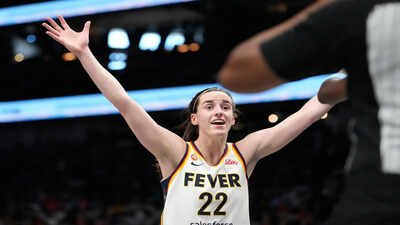
The Indiana Fever were one of the clearest examples of how a team’s national profile can influence the commercial value of the league. The franchise generated $205 million in broadcast Sponsor Media Value, accounting for approximately 37.6 per cent of the WNBA’s $545 million broadcast total.The figure is particularly notable because the Fever played in only 13 per cent of the league’s regular-season games. They were also the only team whose every game was shown nationally, giving sponsors attached to the franchise repeated access to a much wider television audience than teams without the same level of coverage.
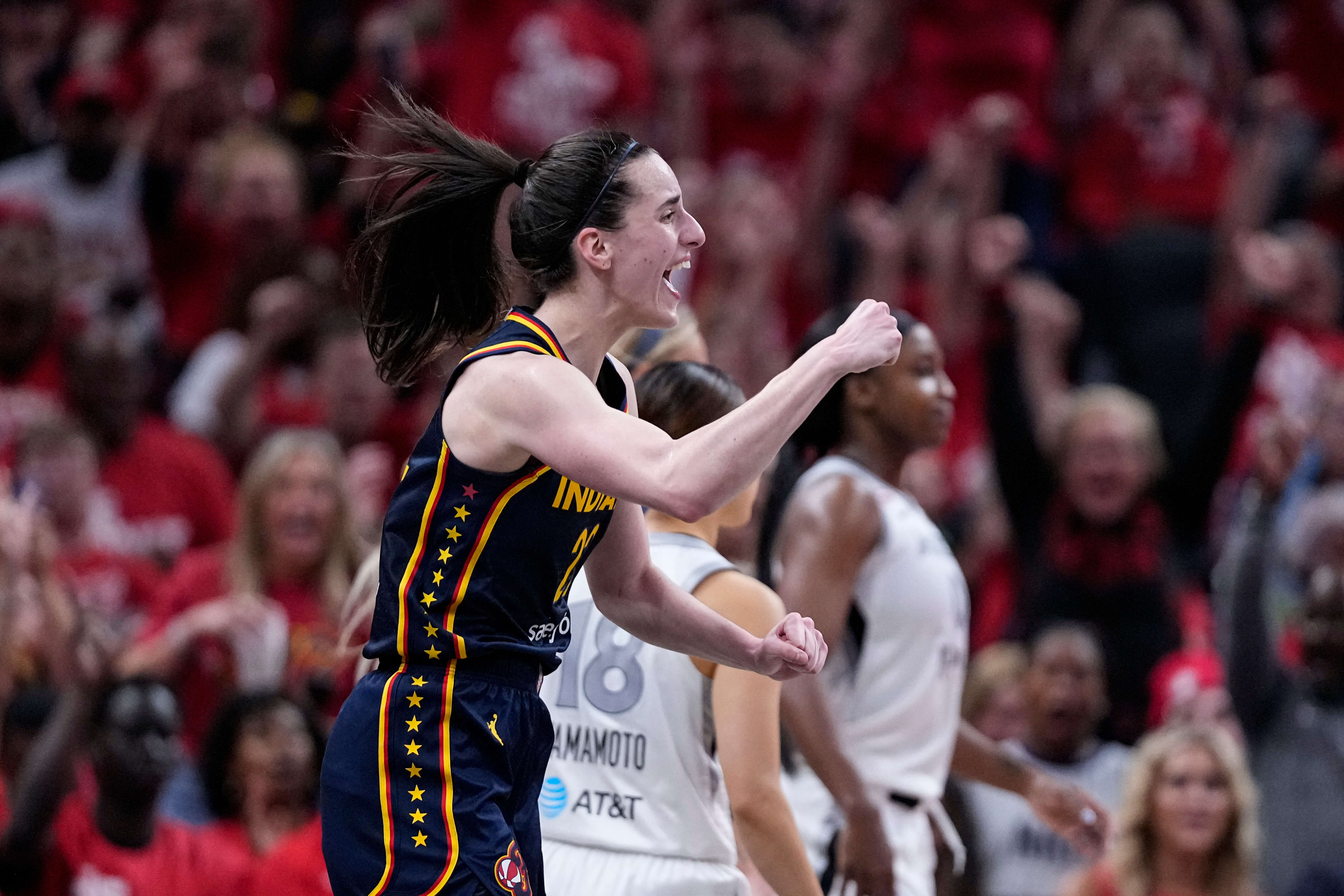
Indiana Fever guard Caitlin Clark celebrates during the second half in Game 2 of a WNBA basketball first-round playoff series against the Las Vegas Aces in Indianapolis, Tuesday, Sept. 29, 2026. (AP Photo/Michael Conroy)
Caitlin Clark’s profile has been central to the Fever’s visibility, with her performances and the attention surrounding the team helping attract viewers across the season. The report also found that Clark and the Fever dominated social media value, although the commercial growth was not limited to Indianapolis.The other 14 teams collectively generated $48 million in full media value through their social media posts, alongside 101 million engagements. That figure points to the value of team-owned content outside live broadcasts, including player photographs, video clips, behind-the-scenes material, Instagram reels and question-and-answer sessions that give supporters more direct access to players.Uniforms were particularly effective in extending sponsorship exposure onto social platforms. They generated more than $40 million in social media value, with social accounting for 39 per cent of the uniforms’ total value. In practical terms, a sponsor’s logo could continue appearing in player photographs and video content long after a game had ended, adding another source of visibility beyond television coverage.Across all sponsorship assets, the floor court logo, baseline apron signage and uniforms were the three most valuable placements. Together, they generated 53 per cent of the WNBA’s total Sponsor Media Value. The findings indicate that where a brand appears can be as important as the size of its partnership, particularly when an asset is repeatedly visible during nationally televised games or reproduced through social media content.The report also identified a relationship between team performance and sponsorship exposure. Seven of the eight teams leading the SMV rankings had winning records during the season. Relo Metrics suggested that successful teams could be better positioned to secure more national primetime appearances in 2027, creating further opportunities for their commercial partners.
Albert shows how brands can benefit without a league-wide deal
Although the five leading league sponsors accounted for approximately 41 per cent of the total value, Relo Metrics found that brands could generate substantial exposure through agreements with individual franchises. Around 85 brands recorded at least $1 million in Sponsor Media Value during the season, demonstrating that the commercial opportunities extended well beyond the league’s biggest partnerships.Financial services and healthcare were two particularly competitive categories. Together, they generated $123 million, or approximately 20 per cent of the WNBA’s total Sponsor Media Value. A combined 23 brands in those sectors crossed the $1 million mark, comprising 11 in financial services and 12 in healthcare. Unlike categories such as beer and apparel, where one dominant partner had a stronger position, neither financial services nor healthcare was controlled by a single brand.The report highlighted Albert, a personal finance and fintech company, as an example of how a business can establish a significant presence through team partnerships. Albert served as the official jersey-patch partner of the Atlanta Dream, Dallas Wings and Los Angeles Sparks, with its branding appearing in 87 nationally televised games.The company generated $14.7 million in Sponsor Media Value, placing it 10th among more than 400 brands analysed by Relo Metrics, despite not having a league-wide sponsorship agreement. Its ranking illustrates how a carefully selected group of team partnerships can deliver national exposure without the cost or scale of a central league deal.The findings arrive as the WNBA continues to expand its footprint. The league currently has 15 teams, each playing 44 regular-season games, producing a total schedule of 330 games in 2026. The report’s reference to 286 games as the current baseline appears to use the previous season’s schedule, when the league had 13 teams. Its longer-term projection anticipates an 18-team league with 468 regular-season games by 2030.The commercial implications extend beyond the additional games themselves. More teams create further opportunities for local sponsorship agreements, while a larger broadcast schedule can give existing partners more chances to reach national audiences. The report’s figures suggest that the value is already being distributed through a combination of league-wide agreements, team partnerships, prominent players and the placement of sponsorship assets across television and social media.