

Guess the country: It has more lakes than any other nation on Earth |
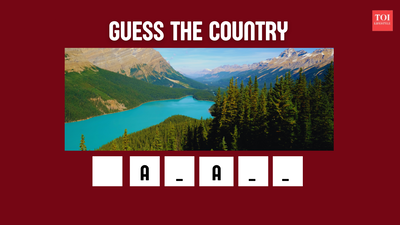

When it comes to lakes, the country that takes the crown is no other than Canada. So if you assumed the title of the world’s ‘lake capital’ belonged to Finland, Sweden, or Brazil, think again. With hundreds of thousands of lakes spread across its boreal heartland, the country’s freshwater wealth is a remarkable legacy shaped by ice, geology, and time.Exactly how many lakes Canada has depends on how a ‘lake’ is defined and what minimum size is used. One widely cited estimate counts approximately 879,800 lakes measuring 0.1 square kilometres (around 24 acres) or larger, already far exceeding any other country’s total. Broader estimates that include smaller water bodies place the number at well over two million lakes nationwide. Some recent claims suggest Canada contains over 60 percent of the world’s lakes above a certain size threshold, potentially more than the rest of the world combined. While that specific “combined” claim remains debated among researchers, the broader conclusion is undisputed: Canada’s lake count eclipses every other nation’s by a substantial margin.Read more: India’s very own Norway: Destinations that resemble the European destination and are best visited in winterThis astonishing bounty is the legacy of the last Ice Age. Much of present-day Canada was buried beneath enormous sheets of ice at one time. The ice sheets gouged out and broke the bedrock as they pushed forward and back, creating basins from the tremendous thickness of ice and large deep gashes that filled with water to become the Great Lakes. After the tectonic activity ceased, precipitation runoff and snowmelt began filling these basins with water forming lakes. These glacial basins, or hollows, are especially abundant in the Canadian Shield — a giant expanse of hard old rock whittled down by countless centuries of long-departed ice sheets and left behind as a vast freshwater wonderland.Another factor is Canada’s vast size and northern latitude. A great majority of lakes are still derelict and nearly as nature made them since so much of the nation still lies wild. Canada has been molded as much by lakes as land, thanks to its intricate jigsaw of land and water.Read more: 8 iconic wildlife reserves in India where the tiger is not the star attractionA few headline facts underline this scale. The five Great Lakes, shared with the United States, together hold about 18 percent of the world’s fresh surface water. Lakes cover an estimated nine percent of Canada’s total land area, an unusually high proportion. And because lake counts vary depending on definitions—such as minimum size or whether seasonal water bodies are included—any precise number should be treated as approximate. Even so, the overall picture is unmistakable: Canada has more lakes than any other country by far.Such wealth turns into endless options for the explorers. The scale of it is incredible, from the remote wilderness waterways of Manitoba and the Northwest Territories to the turquoise glacier lakes of Banff and Jasper. For perspective: Even if you could spend a lifetime exploring all of Canada’s lakes, you would still barely scratch the surface. These lakes are not just scenes; they’re experiences, whether you’re paddling across a still lake at dawn or watching northern lights reflect off snowy water in the depths of winter, Canada’s experiences are unlike any other.