


Vitamin D: Sensitive to sunlight? Here’s the right way to get vitamin D safely |
Vitamin D is called the “sunshine vitamin,” but sunlight is not always kind. For many people, even a short time outdoors leads to redness, rashes, headaches, or pigmentation. Some live in polluted cities. Some have sensitive skin. Others are simply careful because skin cancer risk is real.So how can vitamin D be built safely without harming the skin?The answer lies in balance, timing, and smart testing. Vitamin D is important, but so is skin protection. Both can coexist.
Why vitamin D matters more than most realise
Vitamin D helps the body absorb calcium. It supports bone strength, muscle function, and immune health. Low levels are linked to fatigue, frequent infections, and bone pain. Severe deficiency in adults can lead to osteomalacia, a condition that softens bones.
In India, deficiency is common despite abundant sunshine. A review published by Nutrients has reported widespread low vitamin D levels across age groups.Globally, the National Institutes of Health Office of Dietary Supplements explains that vitamin D plays a role in over 200 gene processes, including immune regulation. Yet, more sun does not automatically mean better levels.

So how can vitamin D be built safely without harming the skin?
Sunlight: How much is enough?
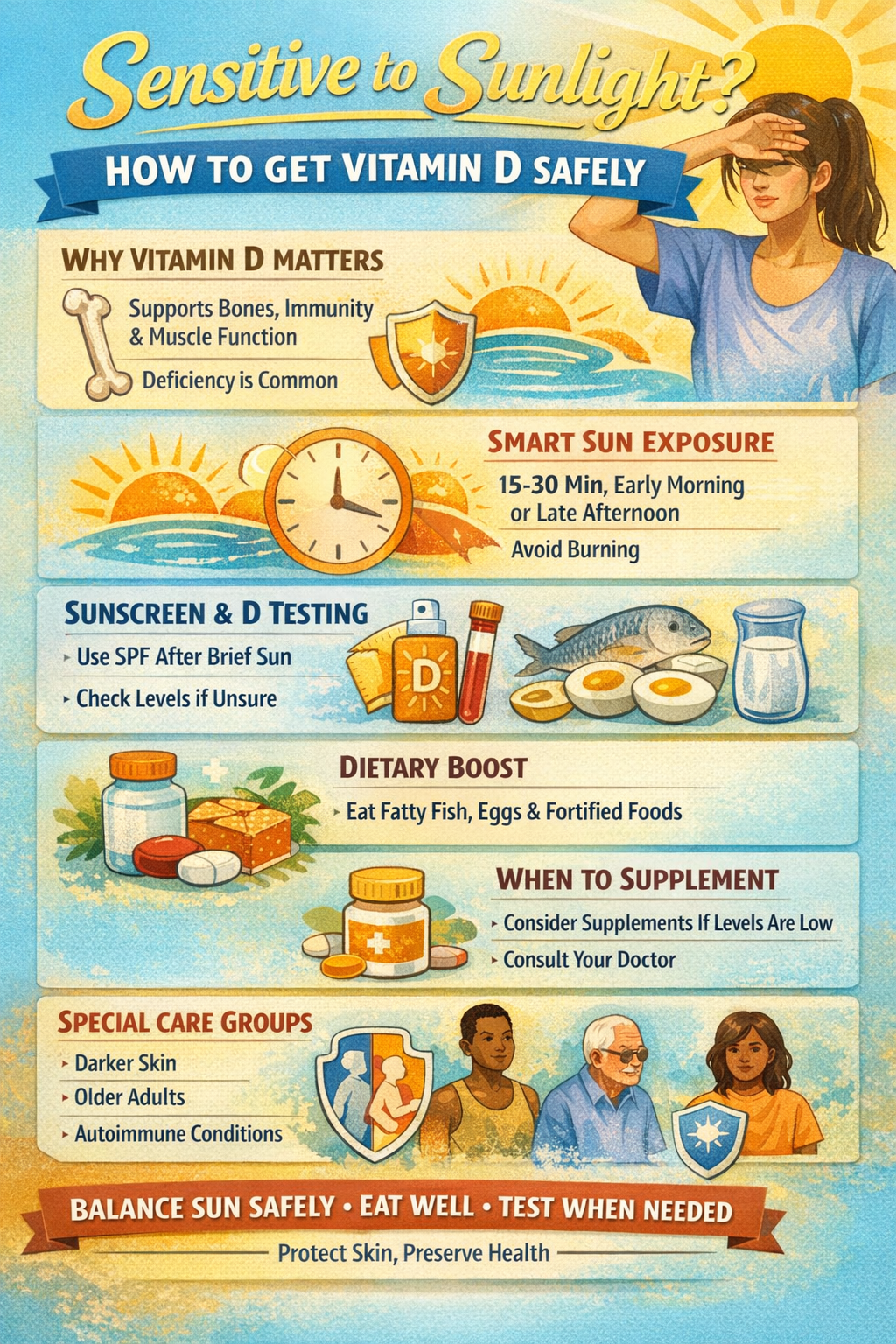
The skin makes vitamin D when ultraviolet B (UVB) rays hit it. But the amount needed is smaller than many assume.According to research published in the Nutrients, lighter skin tones can get enough vitamin D from brief midday sun exposures, but darker skin needs longer exposures because of their higher melanin concentration. Two to three times a week, 15 to 30 minutes of sun exposure on the arms and legs may be enough for many Indian skin types. Longer exposure does not mean more benefit. Once the body makes enough vitamin D, extra UV light simply increases skin damage.
If skin burns easily, timing is everything
Sensitive skin needs strategy.Early morning sunlight before 10 am or late afternoon light after 4 pm carries lower UV intensity. These windows reduce the risk of burns while still allowing gradual vitamin D production.More UVB rays are produced by the midday sun, however it could be too harsh for sensitive people. Shorter exposures to smaller body parts can be beneficial in certain situations. For example, it might be safer to expose the forearms for ten to fifteen minutes as opposed to the entire face.The World Health Organization clearly states that excessive ultraviolet exposure increases skin cancer risk and premature aging. Safe sun practices are strongly advised.The goal is gentle, regular exposure. Not tanning. Not burning.

The skin makes vitamin D when ultraviolet B (UVB) rays hit it. But the amount needed is smaller than many assume.
Sunscreen and vitamin D : Can they coexist?
Many people worry that sunscreen blocks vitamin D completely. In theory, sunscreen reduces UVB penetration. In real life, most people do not apply it thickly or evenly enough to block all UVB.For sensitive skin, one balanced approach is brief unprotected exposure for a few minutes, followed by sunscreen application if staying outdoors longer.The Centers for Disease Control and Prevention supports sun protection to prevent skin damage while acknowledging the importance of dietary sources of vitamin D.Protection and nutrition can work together.
When sunlight is not enough
Urban living complicates things. Air pollution can reduce UVB penetration. Indoor work limits exposure. Covered clothing reduces skin contact with sunlight.In such cases, blood testing becomes important. A simple 25-hydroxyvitamin D test can measure levels.The NIH recommends supplementation for individuals with confirmed deficiency, especially during months with limited sunlight.Supplementation should be supervised. High doses without testing can cause toxicity, which leads to nausea, kidney strain, and calcium imbalance.More is not better.
Longer exposure does not mean more benefit. Once the body makes enough vitamin D, extra UV light simply increases skin damage.
Food: The overlooked ally
Sunlight is not the only source.Vitamin D is naturally found in fatty fish. Fortified milk and egg yolks also play a role. In India, some dairy products and oils are now fortified under government initiatives led by the Food Safety and Standards Authority of India to address micronutrient deficiencies.Food alone may not correct severe deficiency, but it builds a steady foundation.Vitamin D sits at the intersection of sunlight, lifestyle, and science. The safest path is not extreme sun avoidance, nor careless exposure.Short, consistent, non-burning sunlight.Nutritious food choices.Targeted testing when needed.Medical supervision for supplements.Sensitive skin does not mean surrendering bone health. It means being informed and intentional.The body needs sunlight. The skin needs protection. Both deserve respect.