Saudi Arabia leads GCC in Indian deportations: Over 13,000 workers sent home in 2025 | World News
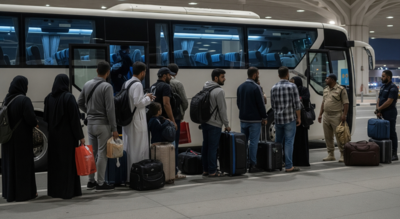
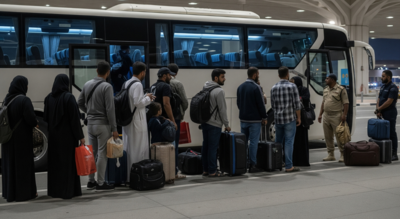
Saudi Arabia emerged as the single largest source of Indian deportations in the Gulf in 2025, overtaking even the United States, according to the figures tabled by the Ministry of External Affairs (MEA) in the Rajya Sabha. The data shows that more than 24,600 Indians were deported globally in 2025, spanning 81 countries, with Gulf Cooperation Council (GCC) nations accounting for a substantial share of removals. Among GCC countries, Saudi Arabia alone accounted for 10,884 deportations in 2025, out of a regional total of 13,133, followed by the UAE (1,469), Bahrain (764), and Oman (16). Figures for Kuwait and Qatar were not listed in the MEA’s Annexure-I for the year. The same annexure shows that between 2021 and 2025, total Indian deportations from GCC countries reached 56,460, with Saudi Arabia accounting for 49,084 across its Riyadh and Jeddah missions, again far outstripping the UAE (3,979), Bahrain (3,202) and Oman (195).
Why Saudi Arabia dominates the numbers
Saudi Arabia hosts one of the largest concentrations of Indian blue-collar workers in the Gulf, particularly in construction, domestic work, caregiving and other labour-intensive sectors. This is closely linked to the Kingdom’s aggressive build-out under Vision 2030, with mega-projects such as NEOM, Qiddiya, the Red Sea Project and Diriyah Gate driving sustained demand for foreign labour across infrastructure, housing and services.MEA data shows that Indian blue-collar workers are present across 14 countries, accounting for about 1.6 million people between January 2020 and June 2025, with the Gulf as the core destination. Among these, Saudi Arabia has the highest number of Indian workers, estimated at 695,269, followed by the UAE (341,365), Kuwait (201,959), Qatar (153,501) and Oman (116,840).Employers and officials say recruitment accelerated sharply after the pandemic, particularly in 2022 and 2023, when labour demand rebounded alongside stalled projects restarting. In 2023 alone, 398,000 workers were sent abroad, with Saudi Arabia employing 200,713 labourers that year and a further 167,598 in 2024. The scale of this intake, experts note, also increases exposure to regulatory enforcement, especially as the Kingdom tightens compliance checks around visas, permits and residency status.That pace continued into 2025. Between January and June, Saudi Arabia recruited 71,175 Indian workers, while the UAE hired 96,401, the highest among Gulf states in that period. Experts note that at such volumes, even limited instances of visa or permit non-compliance can translate into large absolute numbers of deportations once enforcement tightens.
The compliance challenge
As recruitment volumes expanded across the Gulf, enforcement followed. Authorities across the region tightened scrutiny of migrant workers, with overstays, visa violations and work-permit issues emerging as the primary triggers for deportation. Saudi Arabia, the UAE and Bahrain together accounted for thousands of removals as monitoring increased in step with large-scale labour intake and more systematic compliance checks.Bheema Reddy, vice-chairman of Telangana’s NRI advisory committee, said the scale of migration itself often increases exposure to enforcement action. Speaking to TOI, he said: “Gulf countries like Saudi Arabia attract a huge influx of Indian workers, many of whom are low-skilled and come through agents. In the pursuit of better earnings, minor violations of local laws can quickly escalate into deportation cases.”After Saudi Arabia, the UAE recorded the second-highest number of Indian deportations in the GCC in 2025, with 1,469 nationals sent home, followed by 764 from Bahrain. As in Saudi Arabia, common causes included overstaying visas, working without valid permits, absconding from employers, or breaching labour regulations.Officials say enforcement has become increasingly systematic, with closer monitoring of visa timelines, employer records and residency compliance. “Indian workers must track their visa timelines carefully and understand local laws,” Naga Bharani of the Telangana Overseas Manpower Company told TOI, adding that “simple awareness and timely extensions can prevent deportation.”
Recruitment practices and India’s response
A recurring theme across GCC deportations is the role of recruitment agents in India. Misrepresentation of job roles, salaries or visa categories often leaves workers exposed abroad, sometimes without a clear understanding of host-country labour laws.Reddy told TOI that misleading recruitment practices remain a recurring problem. “Many cases arise from workers being lured by promises of better pay or conditions, only to face legal consequences when regulations are breached,” he said, adding that “education before departure is crucial.” The Government of India has repeatedly stressed that only legal migration routes should be used. Overseas recruitment is regulated under the Emigration Act, 1983, and since 2015, emigration to Emigration Check Required (ECR) countries has been processed through the eMigrate portal, a digital system for registering recruitment agencies and issuing emigration clearance. The MEA has also rolled out schemes such as the Pravasi Bharatiya Bima Yojana (PBBY), Pre-Departure Orientation and Training (PDOT), and the ‘Surakshit Jayen, Prashikshit Jayen’ campaign to improve awareness and reduce vulnerability among migrant workers. India has additionally signed Migration and Mobility Partnership Agreements with six countries, including the UK, France and Germany, and Labour Mobility Agreements with 12 countries, including several GCC states. Despite these measures, the latest figures underline the scale of the challenge. With Saudi Arabia continuing to dominate both Indian labour inflows and deportations, experts say stricter compliance, better recruitment oversight and stronger pre-departure awareness will be critical to reversing the trend.