
US-Iran war impact: Retail inflation rises marginally to 3.93% in May, food inflation edges up to 4.78%
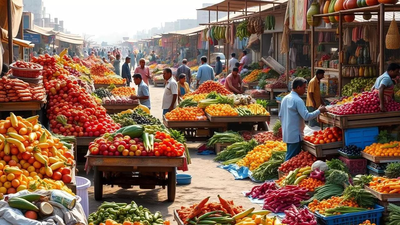
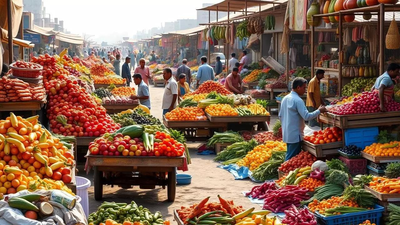
Retail inflation, measured by the Consumer Price Index (CPI), rose to 3.93% in May 2026 from 3.48% in April, according to data released by the government on Friday.Food inflation also increased during the month, with the Consumer Food Price Index (CFPI)-based inflation rate rising to 4.78% from 4.20% in April, the government data showed.The CPI inflation rate stood at 4.25% in rural areas and 3.53% in urban areas in May. Food inflation was recorded at 4.85% in rural India and 4.66% in urban India.Housing inflation for May was 2.12%, with rural housing inflation at 2.73% and urban housing inflation at 1.91%.Among key commodities, silver jewellery recorded the highest inflation rate at 155.23% in May, up from 144.36% in April. Tomato inflation accelerated to 48.43% from 35.26%, while inflation in gold, diamond and platinum jewellery stood at 40.93%.Ginger registered inflation of 32.49%, up from 14.36% in April, while raisins (kishmish) and monacca recorded inflation of 21.97%.On the other hand, potato prices remained sharply lower than a year ago, with inflation at (-)23.71%. Peas recorded inflation of (-)11.47%, while motor cars and jeeps saw inflation of (-)7.19%. Cumin (jeera) and motorcycles and scooters registered inflation rates of (-)4.59% and (-)3.56%, respectively.Commenting on the data, Sujan Hajra, Chief Economist & Executive Director, Anand Rathi Group, said the more than 40 basis-point increase in retail inflation was largely expected.“The over 40 basis-point jump in retail inflation in May 2026 was largely anticipated. Food prices accounted for much of the increase, alongside the impact of higher import duties on gold. By contrast, the pass-through of elevated crude oil prices into domestic petroleum products and gas tariffs remained limited. Both food and fuel inflation are likely to remain on an upward trajectory in the months ahead,” Hajra said.He said the key issue would be whether higher fuel costs begin feeding into transport, logistics and other input costs.“The more important question is whether higher fuel costs begin to generate broader second-round effects through transport, logistics and other input costs. That transmission will need to be monitored closely before drawing firm conclusions on the inflation outlook. Our assessment is that headline retail inflation could breach 6% at some point over the next six months. Even so, the Reserve Bank of India may refrain from adopting a decisively hawkish stance, provided core inflation remains anchored around 4% and inflationary pressures do not become broad-based,” he added.The National Statistical Office (NSO) said it collected price data from 1,407 urban markets, including online markets, and 1,465 villages across states and Union Territories. The response rate was 100% in both rural and urban markets during May.The next CPI inflation data for June 2026 will be released on July 13.