

With better than Rajdhani experience & 160 kmph speed, can Vande Bharat sleeper trains be a game-changer for Indian Railways?
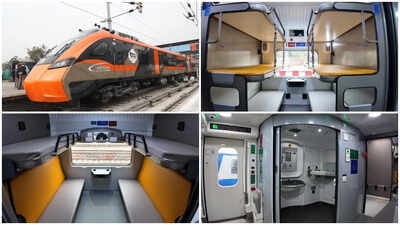
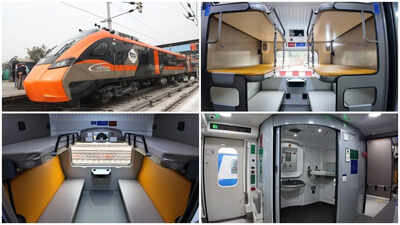
Premium trains – better than Rajdhani and Tejas Express – and offering enhanced passenger comforts and importantly higher average speeds will in the coming years be the new reality for overnight travel on Indian Railways – courtesy the Vande Bharat sleeper train project. Over 250 new trains are in the pipeline for rollout over the next few years – all with the aim to revamp long-distance rail travel and offer a world-class service experience to passengers.The first 16 coach Vande Bharat sleeper train was introduced earlier this year on the Guwahati-Howrah route, reducing travel time substantially and upping the passenger comforts offered. That was the first of many that are lined up by Indian Railways. The new train has a design speed of 180 kmph and an operational speed of 160 kmph, if permitted on the route it runs on.However, the project has faced several delays with the first ten train sets well behind schedule. Indian Railways has said that the new technology has required extensive testing, and the feedback from the prototype is being used to make improvements in the subsequent train sets.
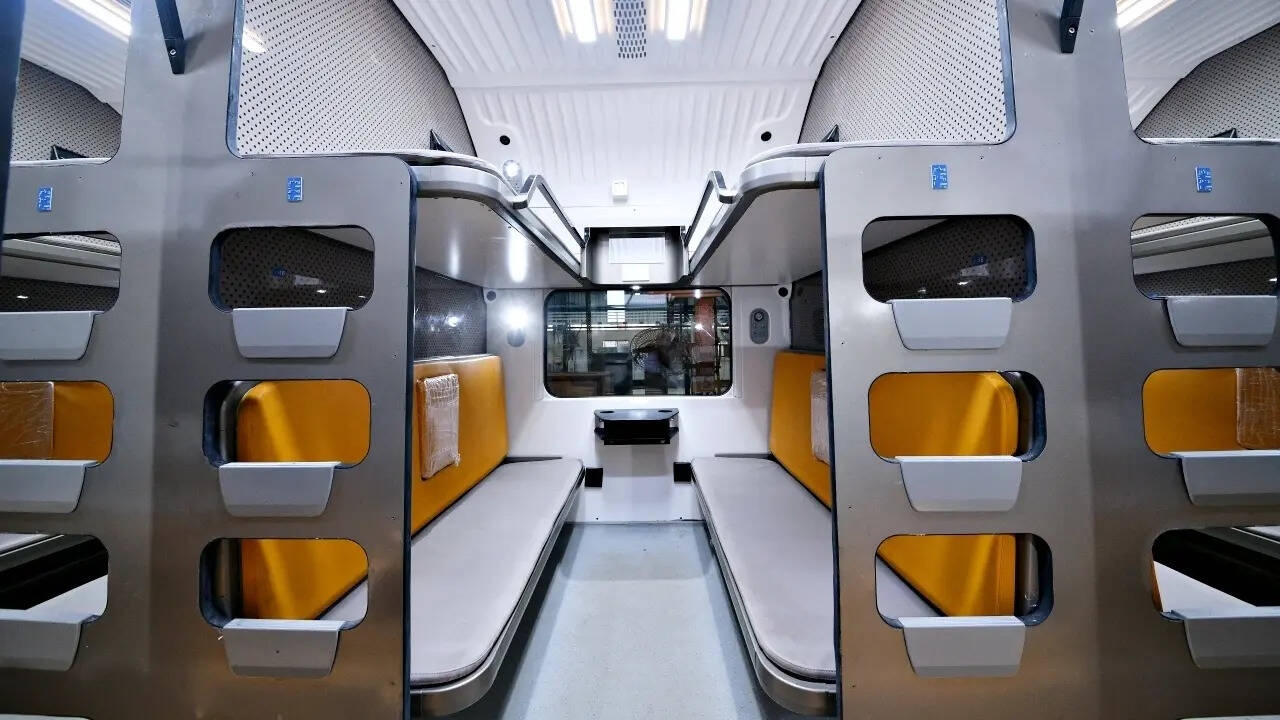
What does the Vande Bharat sleeper train project mean for passenger travel on Indian Railways and will it be a game-changer for railways? Let’s take a look:
Vande Bharat Sleeper Train Project
A total of 260 trains of the Vande Bharat sleeper style will be manufactured. The first ten are being made by BEML in collaboration with ICF, Chennai. A multi-thousand crore project for 200 train sets has been awarded to two consortiums; 120 will be made by Kinet which is an Indo-Russian Joint Venture, and the remaining 80 will be made by Titagarh-BHEL consortium.Sources said that the first prototype rake from Kinet is likely to be ready by the first quarter of 2027. In the first year, Kinet hopes to manufacture 12 train sets of 16 coaches, 18 train sets in the second year, and from the third year onwards the annual target is for 25 train sets.The train from will be broadly comparable to the BEML Vande Bharat Sleeper variant; however, Kinet has incorporated several design enhancements. These include improved stair ergonomics, enhanced seat cushioning, reduced external noise and vibration levels compared to standard trains, optimized lighting systems, and better space utilization to enhance passenger comfort and overall travel experience.Sources also told TOI that around 50 Vande Bharat sleepers will be made by ICF, which will have a pantry car and be a 24-coach variant of the existing train. The designs of the train are currently being finalised.
The Speed Advantage
Vande Bharat sleeper trains make use of distributed power, with no locomotive. This allows for faster acceleration and deceleration, hence increasing the average speed and reducing travel time substantially. The biggest proof of that comes from Vande Bharat chair car trains, which are the fastest on their routes.Railway experts that TOI spoke to said that the new Vande Bharat sleeper project has the potential to speed up long-distance travel on the network, while offering an effective competition to air travel. The premium features of the train also stand out over Rajdhani and Duronto trains.Jagannarayan Padmanabhan, Senior Director & Global Head-Consulting at Crisil Intelligence believes that the Vande Bharat sleeper is not merely another AC rake – it’s a technical plus commercial tool that allows Indian Railways to offer true premium overnight alternatives to short-haul aviation and to extract higher revenue per asset via speed, comfort and ancillaries.
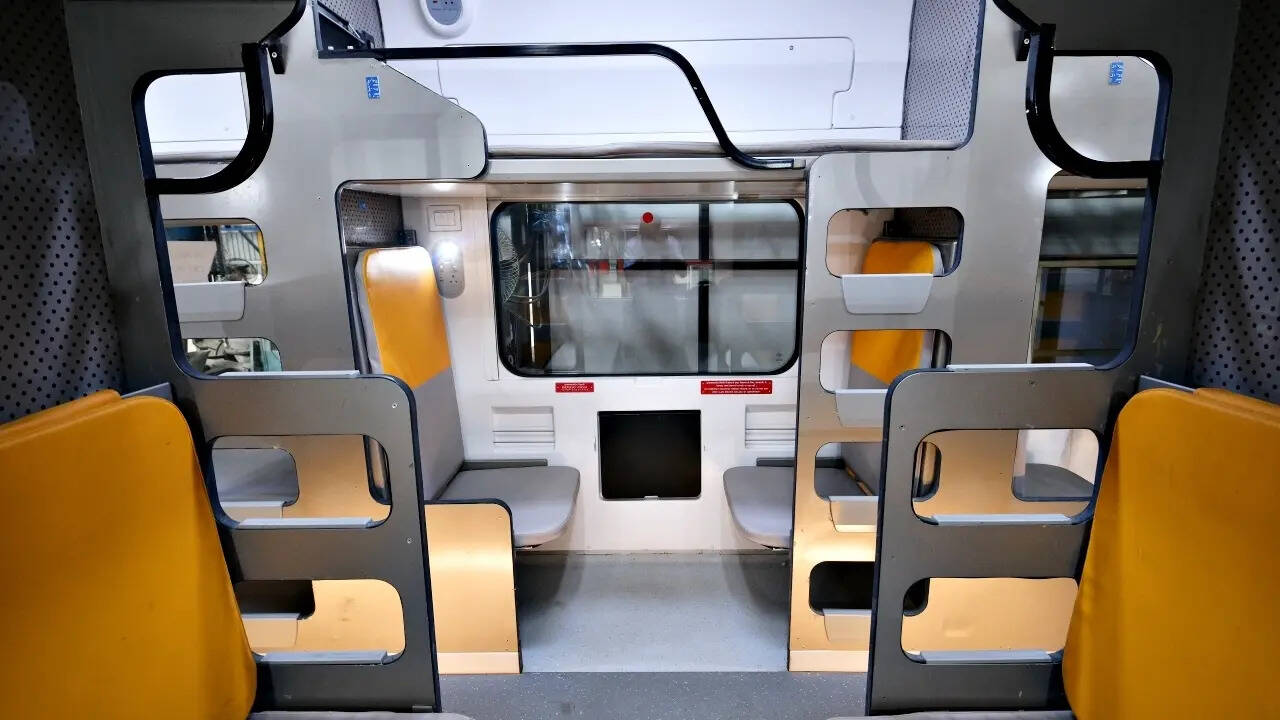
What works in the favour of the new trainset is its engineering. Vande Bharat Sleeper trains are primarily trainsets where motive power is distributed over the entire train. It has the inherent advantage of faster acceleration and deceleration and eliminating the need for reversal of the locomotives at the terminals, explains Shri Prakash, a retired Railway Board member.“Operational advantages of these trainsets are higher average speed which result in lower transit times and much lower terminal detentions,” he tells TOI.
The Revenue Boost
There is also the immense revenue potential for the national transporter, which runs most of its trains in losses due to subsidised fares.According to Jagannarayan Padmanabhan, the Vande Bharat sleeper project is materially positive for Indian Railways’ revenue upside in the premium overnight segment, where airlines have steadily been weaning away higher-yield AC passengers on 8–14 hour corridors by offering competitive “red-eye” schedules and faster end-to-end times.
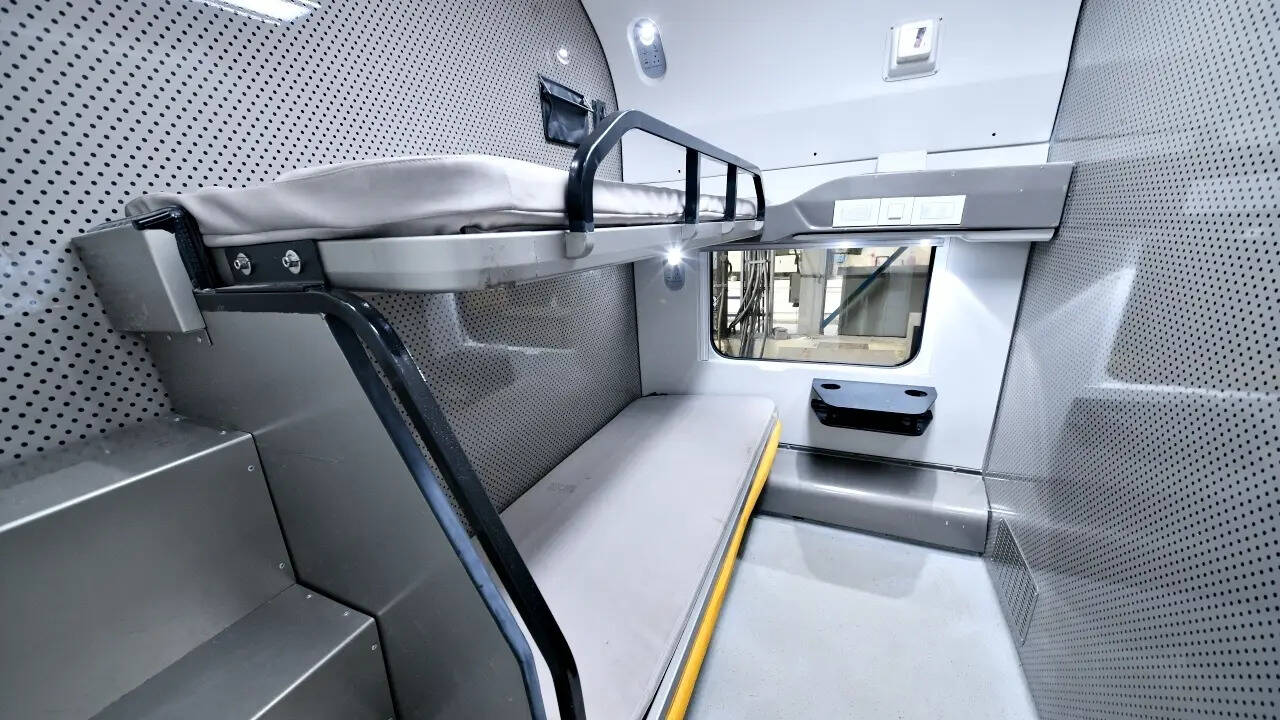
“A faster, hotel-like Vande Bharat sleeper (better punctuality, comfort, and service consistency) gives Railways a credible product to arrest this shift—by converting flyers who value overnight time-savings (sleep while travelling) and city-centre to city-centre convenience, while still pricing below comparable last-minute air fares on many trunk routes,” he says.Importantly, the macro demand mix is already supportive: premium/AC travel has been a growth driver, and Indian Railways has projected ~16% passenger revenue growth in FY26 aided by demand for AC3 and premium trains (including Vande Bharat). In that context, Vande Bharat sleeper is not just a fleet upgrade – it’s a yield and market-share defense tool that can lift premium mix and realizations into 2025–26 as deployments scale, he adds.Shri Prakash tells TOI that the new train will be very useful for Rajdhani and Duronto train routes. Indian Railways can charge higher prices for providing faster overnight trains and thus increasing its revenue. On the flip side, higher prices may hasten the shift to air travel and hence there will be little scope for increasing existing Rajdhani type trains, he cautioned.He also believes that Vande Bharat sleeper trains will be useful for Delhi-Kolkata and Delhi-Mumbai routes where Indian Railways now have dedicated freight routes.“On other routes where there is a mixed traffic, both freight and passenger trains are in almost equal proportion, introduction of faster passenger trains like Vande Bharat will be at the cost of slowing down of freight trains and also affecting the capacity of route adversely. It will be better if Vande Bharat Sleeper trains are kept confined on these two routes for next few years till more capacity is generated on other important routes,” he tells TOI.
Attaining Potential Of The Vande Sleeper Project
While acknowledging that this project has potential to revamp premium travel experience, experts also say that it’s important for Indian Railways to upgrade other aspects of its infrastructure to derive maximum benefit.“The upside is substantial if Indian Railways couples rolling stock rollout with targeted corridor upgrades, modern signalling, disciplined route selection and commercial yield management. Without those complementary steps the trains will be a high-quality product with under-realised economic value and some routes may struggle, as seen with daytime Vande Bharat redeployments,” Jagannarayan Padmanabhan explains to TOI.
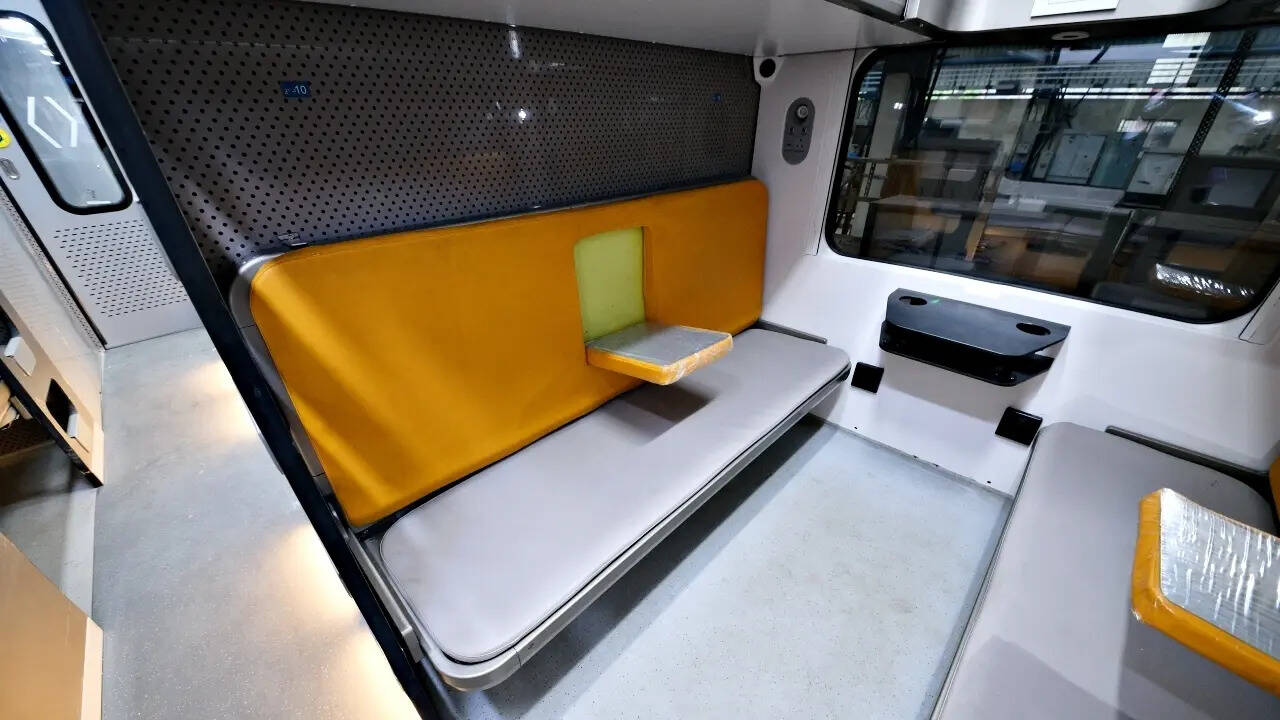
He advises that to derive maximum speed and capacity from premium services, Indian Railways should optimize for effective average speeds of 80–100 kmph, not just higher top speeds.For him, the operational ‘sweet spot’ lies in enabling trains to reliably cover around 500 kms distance in 5–6 hours with only two stops, which makes railways competitive on door-to-door time while remaining safer and better value than flying.“Achieving this requires disciplined timetables with dedicated premium paths, strict control of station dwell times, and a clear overtaking strategy so premium trains are not routinely stuck behind slower services,” he says.The expert says that the biggest payoff will come from systematically removing temporary and permanent speed restrictions through targeted track, turnout, and OHE upgrades on key corridors. “Capacity can be raised by running longer formations where platforms permit, adding frequency on high-demand routes, and using balanced dynamic pricing that protects affordability. Above all, reliability and punctuality must be treated as core premium features,” he adds.Indian Railways is focusing on speed – whether with new bullet train projects like the ones announced in this year’s Budget, or the latest semi-high speed project between Ahmedabad and Dholera that got a Cabinet nod on Wednesday.Vande Bharat sleeper trains, like their chair car versions, are an attempt to offer a premium experience for travellers, while at the same time ensuring faster, safer travel with minimal turnaround time. The success of all the new trains that will be launched in the coming years will ultimately rely on coordinated efforts to upgrade infrastructure across major routes on the network.